Web Audit
How to Write Meta Descriptions That Actually Get Clicked
A good meta description cannot guarantee more clicks, and Google may choose to display different text from your page
Synoloop Solutions 7 min read
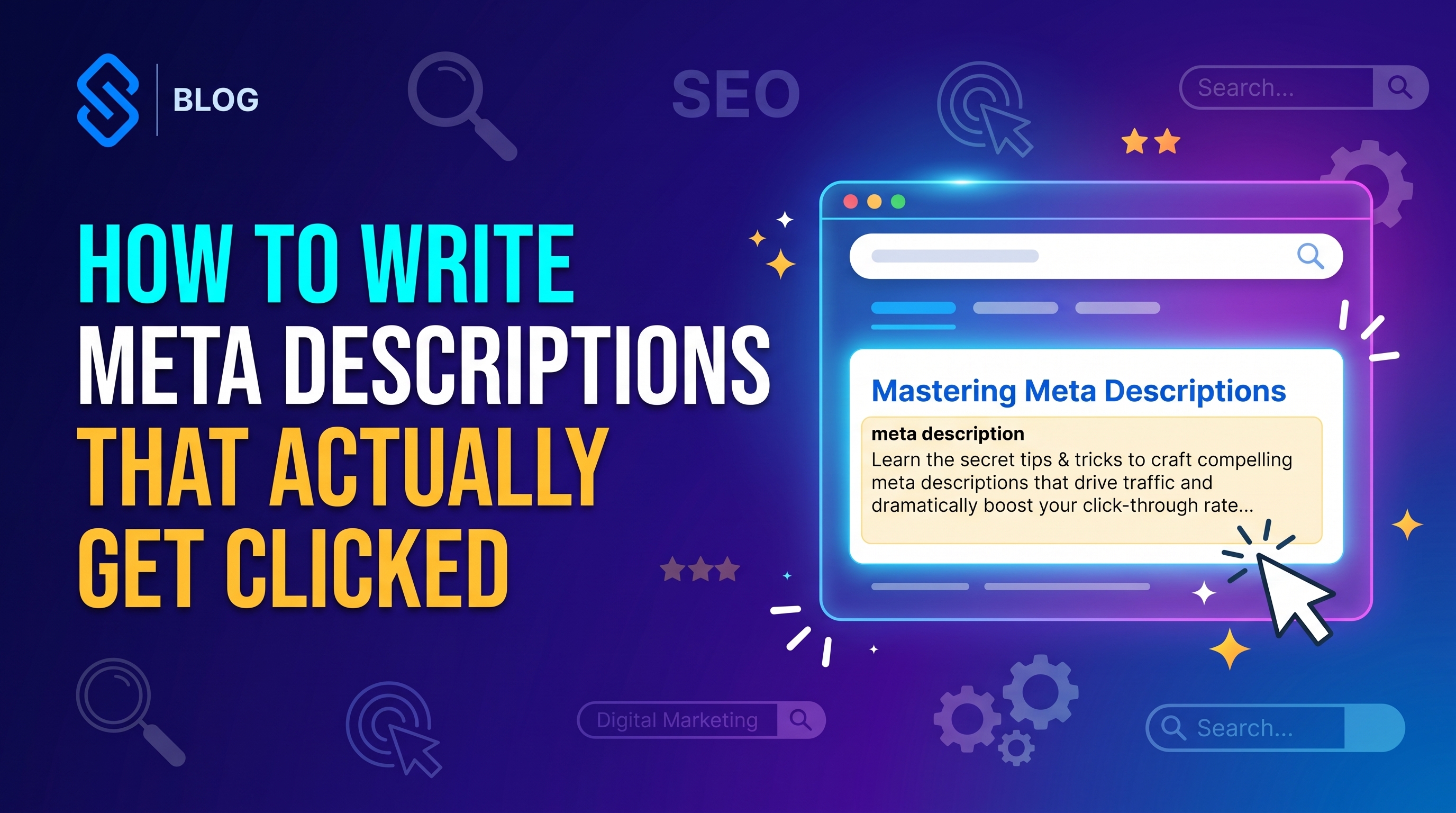
When someone searches for a product or service on Google, they often compare several results before deciding which one to open. Your website might appear alongside competitors with similar offerings, but the words displayed beneath your page title can help a searcher decide whether your result is worth clicking.
That short piece of text is your meta description. It may seem like a minor SEO detail, yet it gives you an opportunity to explain what a page offers before someone visits it.
A good meta description cannot guarantee more clicks, and Google may choose to display different text from your page. However, writing a clear, relevant description gives searchers a better reason to consider your result.
What Is a Meta Description?
A meta description is an HTML element that provides a summary of a webpage. Search engines may use it as the descriptive snippet beneath a page's title in search results.
For example, a Nigerian furniture store could use a description such as: “Explore office chairs and desks for Nigerian businesses. Compare styles, find the right fit for your workspace, and browse available options.”
This tells potential visitors what the page contains and who it may be useful for. A vague alternative such as “Welcome to our website. We offer quality products and excellent service” communicates very little that distinguishes the business from its competitors.
The purpose is not to squeeze as many keywords as possible into a sentence. It is to give searchers an accurate, useful reason to visit the page.
Match the Searcher's Intent
The most effective descriptions begin with understanding what someone wants when they search.
A person searching for “website design services in Lagos” is probably looking for a provider. Someone searching for “how to improve website speed” is more likely looking for guidance. Using the same generic description for both pages ignores the difference in intent.
Your description should reflect the page's actual purpose. A service page should explain the service and its relevant benefit, while an educational article should communicate what the reader will learn. A product page should highlight useful details about the product rather than simply describing the store.
When the description matches the searcher's expectations, the person can make a more informed decision about whether to click.
Lead With the Most Useful Information
Searchers often scan results quickly, so avoid making them work to understand what your page offers.
Put the most important information near the beginning of the description. Depending on the page, this could be the service, product category, audience, location, or specific problem the content addresses.
For example, “Find practical website audit services for your business” is more immediately informative than “Welcome to our company, where we are committed to delivering innovative digital solutions.”
The second sentence uses familiar marketing language without explaining what the business actually does. Clear wording usually gives a searcher more useful information than broad claims about quality or excellence.
Give People a Reason to Click
A meta description should explain not only what the page is about, but also why it may be worth visiting.
That reason could be a useful guide, a comparison of available options, a clear explanation of a service, or practical information that helps someone make a decision. You do not need exaggerated promises to make a page appealing.
For example, an article about website audits could use: “Learn what a website audit checks, how often to run one, and how to identify issues affecting your site's performance, SEO, and user experience.”
This gives readers a clear expectation of what they will get from the page. It is more useful than simply repeating the title, “Website Audit Guide.”
Use Keywords Naturally
Including the main topic in your meta description can help searchers recognise that your page is relevant to their query. However, repeating the same keyword several times does not make a description more persuasive.
Consider a page targeting “local SEO for Lagos businesses.” A natural description might read: “Learn how Lagos businesses can improve local search visibility through Google Business Profile, useful website content, and consistent business information.”
The topic appears naturally, and the description explains what the reader can expect. There is no need to add awkward variations such as “Lagos local SEO, local SEO Lagos, best Lagos SEO local services.”
Write for the person making the search, not for a keyword counter.
How Long Should a Meta Description Be?
There is no fixed character limit that guarantees your entire meta description will appear in Google Search. Snippets can be shortened depending on the available display space, the device, and the search query.
A practical starting point is around 140–160 characters, but treat this as a writing guideline rather than a strict SEO rule. The most important information should appear early enough that the description remains useful even if the ending is not displayed.
Avoid adding unnecessary words just to reach a particular length. A concise description that clearly explains the page is better than a longer sentence filled with repetition.
Write a Different Description for Each Important Page
Using the same meta description across many pages wastes an opportunity to communicate what makes each page relevant.
Imagine an e-commerce store selling laptops, monitors, and accessories. If every category page uses “Shop quality electronics at affordable prices,” searchers receive little information about the specific page they might visit.
A laptop category could highlight available laptop options, while a monitor category could focus on displays for work, gaming, or office setups. Each description should reflect the content and purpose of its page.
Prioritise important pages first, including your homepage, main service pages, product categories, and articles that attract meaningful search traffic.
Avoid Promises Your Page Cannot Keep
A description may earn a click but still disappoint the visitor if it exaggerates what the page contains.
Claims such as “the cheapest in Nigeria,” “guaranteed number-one rankings,” or “instant results” should not be used unless they are accurate and appropriately supported. Misleading descriptions can create a mismatch between the search result and the actual page.
A strong description sets the right expectation. When the visitor arrives, the page should deliver on what the description led them to anticipate.
This matters because attracting clicks is only one part of a successful search experience. The page must also be useful once someone arrives.
Measure What Works With Google Search Console
You do not have to guess whether your meta descriptions are helping. Google Search Console's Performance report shows impressions, clicks, click-through rate (CTR), and average position for pages and search queries.
If a page receives many impressions but has a relatively low CTR, its search result may deserve a closer look. However, do not automatically blame the meta description. Ranking position, search intent, competing results, the page title, and the type of query can all influence whether someone clicks.
Review the relevant queries and compare similar periods where possible. Then improve the title and description if they do not clearly communicate the page's value. Monitor the results over time rather than assuming that a single change caused every movement in CTR.
Also remember that Google may generate a snippet from the visible page content instead of using your supplied meta description. Writing a good description is worthwhile, but it does not guarantee Google will display it exactly as written.
Make Every Search Result More Useful
A meta description is a small part of SEO, but it serves a practical purpose: it helps people decide whether your page is relevant to what they need.
Focus on search intent, clear wording, useful information, and honest expectations. Keep descriptions distinct for important pages, place key information early, and use Search Console to identify opportunities for improvement.
You do not need clever wordplay or aggressive sales language. You need to help the right person understand why your page deserves their attention.
Let Synoloop Review Your Website
Meta descriptions are only one part of how your website performs in search. Technical problems, confusing page layouts, weak content, and poor mobile experiences can also affect what happens after a visitor clicks.
Synoloop's website audits examine UI/UX, frontend systems, accessibility, and SEO to help identify issues that may be limiting your website's effectiveness.
Start with our QuickScan, a free website audit delivered within 24 hours, with up to five free audits available each month.
Make your search result worth clicking, then make sure your website gives visitors a good reason to stay.
Get Your Free Website QuickScan → synoloopsolutions.com.ng/contact?quickscan=1
Explore Our Website Audit Services → synoloopsolutions.com.ng/web-audit
Contact Synoloop Solutions → synoloopsolutions@gmail.com
Follow Synoloop Solutions: LinkedIn · X · Instagram · TikTok · Facebook